
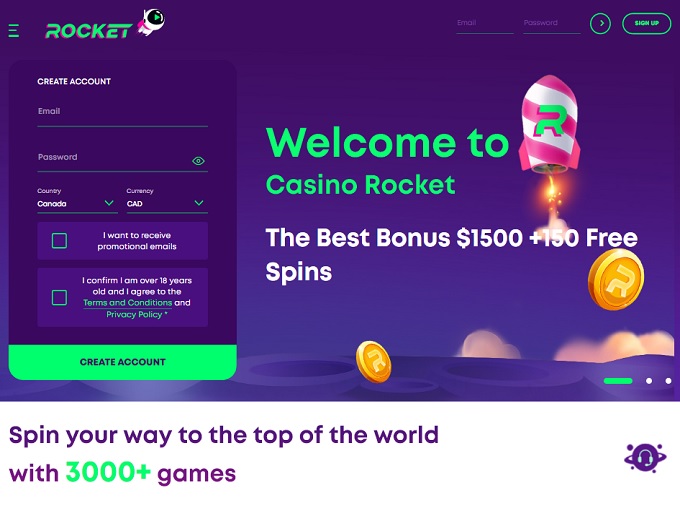
When a player sets up an account at Rocket Casino, the privacy settings embedded the registration and login process form the first line of defence for personal information. These controls are not hidden deep inside a menu after the fact; they begin at the sign-up form and carry through through every subsequent login, verification step and account adjustment. For Australian players, comprehending how these settings operate is essential because the country’s privacy principles and the casino’s own security architecture collaborate to determine exactly what data is collected, how it is stored and who can access it. The login page itself acts as a gateway to a dashboard where preferences can be refined, from marketing permissions to two-factor authentication. This article outlines each layer of privacy management at Rocket Casino, moving from the initial registration through identity verification, login protection, communication choices, profile visibility, advanced security tools and finally the resolution of common access problems. Every feature outlined here is accessible once a player logs in, and the information is grounded in real account journeys that Australian users may encounter.
The Purpose of Privacy Settings Throughout Account Registration
Account setup at Rocket Casino is the time when a player initially faces privacy choices. The registration form requests basic personal information such as full name, date of birth, residential address, email address and mobile number. Each field is linked to a specific regulatory mandate, and the casino’s privacy policy clarifies why the data is necessary before the form is submitted. During this step, the player is commonly presented with a checkbox or toggle that controls marketing consent. This is a direct privacy option: ticking the box enables Rocket Casino to send promotional emails, SMS messages or push notifications, while leaving it unchecked limits communication to essential service notices only. The choice can be modified later, but making it at registration establishes the tone for the entire account interaction. Australian privacy law stipulates that consent be informed, so the language around the checkbox is deliberately clear and free of pre-ticked defaults.
In addition to marketing consent, the registration process also establishes the player’s first authentication layer. The password created at this stage must meet minimum complexity standards, which Rocket Casino enforces through a strength meter that appears on the sign-up page. While not a privacy setting in the usual sense, a strong password directly secures the personal data stored inside the account. Players are advised to avoid using the same password they utilize on other sites, because credential reuse is one of the most common ways accounts are hacked. The registration form also records the player’s preferred currency, which for Australian users will typically be Australian dollars, and this choice influences how transaction records are displayed. All of these initial inputs are transmitted over an encrypted connection, meaning that even during account creation the privacy of the information is maintained from the very first keystroke.
An additional privacy consideration during registration is the gathering of device and location data. Rocket Casino’s platform may store the IP address and browser fingerprint at the moment of sign-up for security and fraud prevention reasons. This is disclosed in the privacy policy and serves as a baseline for later login monitoring. If a player tries to access the account from a markedly different location or device, the system can flag the activity. While the player does not directly toggle this collection, they are notified of it and can later examine login history inside the account dashboard. Understanding that registration is not just about creating a username but also about laying the foundation for ongoing privacy protection helps Australian players appreciate why every field matters and why accurate information is vital for both security and future verification.
Understanding KYC Verification and Data Protection
Know Your Customer verification is a required step at Rocket Casino that connects directly with privacy settings. Once a player has registered and wants to make a withdrawal or passes a cumulative deposit threshold, the casino will ask for identity documents. Common documents include a government-issued photo ID such as an Australian driver licence or passport, a recent utility bill or bank statement showing the registered address, and occasionally proof of ownership of the payment method used. The privacy settings regulating this process define how the uploaded files are kept, who within the casino’s compliance team can access them, and how long they are retained. Rocket Casino uses encryption both in transit and at rest, indicating that documents are scrambled during upload and remain scrambled on secure servers. Access is confined to authorised personnel whose own activity is tracked, creating an audit trail that safeguards the player’s sensitive information.
The KYC process also includes a privacy trade-off that players should understand. Providing a copy of a driver licence discloses a photo, signature and licence number, which is more data than the casino strictly demands for age verification alone. To mitigate this, players can redact the licence number or middle name if the casino’s guidelines permit it, though the full name and date of birth must remain visible. The uploaded documents are typically stored in a dedicated compliance vault separate from the main gaming database, which reduces the risk of exposure in the event of a breach elsewhere in the system. Australian players profit from the fact that Rocket Casino operates under a recognised international gaming licence, which establishes data protection standards that align with the Australian Privacy Principles. This means that personal information collected for verification cannot be used for marketing purposes unless explicit consent has been given separately.
Scheduling and correspondence around verification also have privacy implications. When documents are submitted, the player receives a confirmation email that does not contain the documents themselves but references a secure ticket number. This prevents sensitive attachments from sitting in an email inbox. The verification status is visible inside the account dashboard, and the player can see whether documents are pending review, approved or rejected without needing to call support. If additional information is needed, the request comes through the same secure channel. Once verification is complete, the player can request data deletion under certain circumstances, though regulatory requirements may force the casino to retain records for a minimum period, often five to seven years after the account is closed. Rocket Casino’s privacy policy outlines these retention periods clearly, and the account settings page provides a summary of what documents are currently on file.
Protecting Your Account with Advanced Privacy Tools
Outside the basic settings, Rocket Casino offers a suite of enhanced privacy tools that provide Australian players more profound control over account security. One such tools is session management, which lists every device and browser currently logged into the account. From this panel, a player can remotely terminate any session with a single click. If a player notices a session from an strange location or an old phone that was sold or lost, ending that session instantly revokes access. This feature is especially useful after traveling or using a public computer, because it eliminates the risk of a remaining authenticated session. The session list includes the device name, IP address, browser type and last activity time, allowing the player to audit access points with precision.
An additional advanced privacy function is the ability to control login attempts by geography or IP range, where supported. While not all casinos offer full IP whitelisting, Rocket Casino’s security infrastructure can identify and prevent login attempts from countries where online gambling is forbidden or from known similarweb.com anonymising services such as VPNs and Tor exit nodes. The player does not must configure this manually; it operates automatically as a protective filter. However, players who employ a VPN for legitimate privacy reasons should be cognizant that connecting through a server in a restricted region may trigger a temporary block. In such cases, switching to an Australian VPN server or disabling the VPN during login resolves the issue. The account security log will display any blocked attempts, providing transparency into when and why access was denied.
Deposit method privacy is another aspect that sophisticated settings manage. When a player deposits using a credit card, bank transfer or e-wallet, the casino stores a tokenised reference rather than the full financial details. This implies that even within the account, the complete card number is never revealed. Players can handle saved payment methods in the cashier section, where they can remove old cards or e-wallet accounts entirely. Eliminating a payment method ensures that it cannot be used for future deposits and wipes the token from the system. For added privacy, Rocket Casino also offers prepaid vouchers and paysafecard, which permit deposits without linking any bank or card information to the casino account at all. These methods are particularly preferred among players who desire to keep their gaming expenditure completely separate from their main bank statements.
Managing Your Access Information and User Entry
After enrollment and verification, the daily act of signing in becomes the most regular interaction with security settings. Rocket Casino’s login page is the gateway where information are verified, and the surrounding options define how safe that entry point stays over time. The primary security instrument in this area is the passcode itself. Users can update their secret key at any time from the account preferences, and the gaming site encourages updates every few months. A robust passcode should be at least twelve digits long and include a combination of upper-case characters, small letters, numbers and signs. The login page also includes a “remember me” feature on trusted personal gadgets, which keeps a safe cookie rather than the secret key. This convenience option should only be enabled on devices that are not shared, because anyone with direct access to that gadget could open the casino user without re-entering information.
Two-factor authentication adds a critical extra layer of data security at the point of login. When enabled, the player must provide a one-time code from an authenticator app or obtained via SMS in combination with the password. This means that even if a password is stolen, the account remains inaccessible without the second factor. Rocket Casino presents 2FA as an optional feature, and Australian players who prioritize privacy are highly recommended to enable it. The setup process includes scanning a QR code with an authenticator app such as Google Authenticator or Authy, after which the account and the app are securely connected. Backup codes are supplied during setup and should be stored offline in a secure place, because being locked out of the authenticator device without backup codes can result in a lengthy account recovery process that demands manual identity verification.
Login monitoring is an additional privacy setting that frequently goes overlooked. Within the account dashboard, players can view a log of recent login attempts, comprising the date, time, IP address and device type. This transparency permits a player to spot illegitimate access attempts rapidly. If an unfamiliar login appears, the player can promptly change the password and review active sessions. Rocket Casino also sends automated email alerts for certain events, like a login from a new device or a change to security settings. These alerts are not promotional and cannot be turned off, because they serve as a critical privacy safeguard. By routinely checking the login history and keeping 2FA active, a player maintains tight control over who can enter the account and when, turning the simple login page into a powerful privacy management tool.
Adjusting Communication Preferences and Marketing Consent

Once inside the account, one of the most straightforward privacy settings pertains to how Rocket Casino engages with the player. The communication preferences panel divides messages into distinct categories: promotional offers, game release announcements, tournament invitations, account service notifications and responsible gambling reminders. Each category has its own toggle, providing the player granular control rather than a single all-or-nothing switch. Promotional emails and SMS messages are entirely optional, and a player who wants maximum privacy can disable them while still receiving essential transactional emails such as deposit confirmations and withdrawal updates. This separation is important because transactional messages are required for account security and cannot be opted out of, whereas marketing messages are a choice that directly affects the amount of personal data used for profiling and campaign targeting.
Marketing consent also influences how the casino manages behavioural data. When a player agrees to receive promotions, Rocket Casino may examine gameplay patterns, favourite game types and deposit frequency to customise offers. This profiling is done internally and the data is not sold to third parties, but it still constitutes a use of personal information beyond the core service. If a player revokes marketing consent, the profiling ends and any previously derived insights are no longer applied for campaign purposes. The change becomes active within a short processing window, usually forty-eight hours, and the player will see that generic offers take the place of personalised ones. Australian players who are wary about data use often decide to keep marketing toggles off and instead visit the promotions page manually when they are interested in bonuses, retaining full control over what they see and when.
Push notifications on mobile devices constitute another communication channel with its own privacy setting. Rocket Casino’s mobile platform can send alerts about new games or time-limited offers, but these require explicit permission at the operating system level. The casino’s app will prompt the player to grant or deny notifications, and that choice can be changed later in both the app settings and the device’s system preferences. Disabling push notifications does not affect the functionality of the casino games themselves, and it prevents the app from appearing on the lock screen with potentially sensitive information. For players who share a device or simply like a quieter experience, turning off push notifications is a simple way to lessen the visibility of their gaming activity. All communication settings are accessible under a single “Notifications” tab in the account dashboard, making it easy to check and adjust them in one session.
Overseeing Your Profile Visibility and Gameplay Data
Confidentiality at Rocket Casino extends beyond contact details and toward how a player appears to others and what gameplay data is recorded. The casino offers a profile customization section where players can set a display name or alias that appears on leaderboards, live chat and tournament brackets. Opting for a nickname in place of a real first name is a simple but impactful privacy measure, because it stops other players from connecting the gaming identity to a real-world person. The display name may be altered a restricted number of times to prevent abuse, and offensive terms are screened automatically. In addition to the display name, players can choose an avatar from a gallery or submit a custom image, though custom images are checked to ensure they do not contain personal information such as a face photo or an email address.
Visibility of gameplay data is another area where privacy options come into play. By default, a player’s latest wins, jackpot wins and high scores may be shown in public feeds or on the casino’s winners’ board. This option is meant to generate excitement, but not every player desires their activity publicized. rocketcasino mobile login offers a toggle called “Show my activity on public feeds” within the privacy configurations. When this is switched off, the player’s victories and successes remain confidential, only visible to the player and the casino’s internal systems. The toggle does not affect the logging of gameplay for compliance and responsible gaming purposes; that data is still logged in a secure manner and can be retrieved by the player in their history of transactions. It only controls the public-facing display, offering the player a decision between celebrating wins publicly or maintaining their confidentiality.
Transaction history and safe gaming tools are also part of the profile privacy landscape. The deposit and withdrawal ledger is strictly private and never shared with other players, but it is visible to anyone who can log into the account. For this reason, players who share a computer or leave their account logged in should be aware that banking information could be exposed. Rocket Casino addresses this with an automatic session timeout that logs the account out after a period of inactivity, which is configurable in the security settings. Additionally, safe gaming tools such as deposit limits, loss limits and session time reminders are managed in a section that is only accessible after re-entering the account password. This extra authentication step ensures that even if someone gains temporary access to the account, they cannot alter the safety controls that protect the player’s time and money.
Troubleshooting Frequent Security and Sign-in Problems
Even with strong privacy settings in place, players can experience obstacles that block them from getting into their accounts or controlling their preferences. The most frequent issue is a lost password. Rocket Casino’s login page includes a “Forgot Password” link that starts a reset process. The player submits the registered email address and receives a time-limited reset link. This link becomes invalid after a short window, typically thirty minutes, and can only be used once. If the email does not come through, the player should check the spam folder and verify that the casino’s domain is set as a safe sender. Resetting the password does not change any other privacy settings, but it does log out all active sessions as a security precaution, which means the player will need to log in again on every device. This automatic session invalidation protects the account in case the password reset was started by an unauthorised party.
Account blocks and verification delays are another common pain point. After a number of unsuccessful login attempts, Rocket Casino will temporarily lock the account to guard against brute-force attacks. The block period is usually short, approximately fifteen to thirty minutes, and the player is sent an email notification about the failed attempts. If the player is blocked and can’t wait, contacting customer support through live chat or email is the quickest way to resolve. Support agents will pose security questions to confirm identity before unlocking the account, and this procedure itself is a privacy safeguard. Verification delays can arise if provided documents are unclear, expired or display a name that does not exactly match the registered information. In those instances, the account dashboard will show a specific reason for the refusal, and the player can resubmit corrected documents. Having a clean scan of a valid Australian driver licence or passport on hand before initiating verification can eliminate these delays entirely.
Sometimes, a player may notice that a privacy setting does not work as intended. For example, marketing emails might continue to appear for a few days after the consent toggle is turned off. This happens because some campaigns are scheduled in advance, and the change takes full effect only after the next campaign cycle. If promotional messages remain beyond a week, getting in touch with support with a specific request to be removed from all mailing lists will activate a manual override. Similarly, if a player believes that their account has been accessed without permission, the first step is to change the password immediately, enable two-factor authentication if it is not already active, and review the login history for suspicious entries. Rocket Casino’s support team can then set a temporary freeze on the account while the situation is looked into, ensuring that no withdrawals or changes can take place until the player validates that security has been reestablished. These steps, combined with the privacy settings already described, establish a comprehensive safety net that maintains the player in control of their personal information at every stage of the account journey.