The Function of Betting Features in Slots
When we sit down to play an online slot, the allure of a big win often goes hand in hand with a decision that presents itself right after a successful spin: the gamble option. That small, flashing button prompts us to risk our hard‑won payout for a chance to double it, quadruple it, or lose it entirely. For many players, this feature is a core part of the excitement, while others avoid it completely, preferring to lock in every win. Comprehending the role these gamble features play is essential, not just for managing our bankroll but for appreciating how modern slots are designed. We are going to explore the mechanics, the psychology, and the mathematical impact of gamble options, using the spectacular see more details as a central case study. Although this particular game from Pragmatic Play does not include a gamble feature, its design choices illuminate why developers include or omit this mechanic, and how that decision shapes the entire playing experience. By the end, you will know exactly what a gamble option does, when it makes sense to use it, and how it fits into the wider world of high‑volatility slots.
Grasping the Gamble Option in Slot Games
The gamble feature, occasionally termed “Gamble,” “Double Up,” or “Risk,” is an optional mini‑game presented after any winning spin in many video slots. Its core aim is to let us stake the amount we have just won on a different game of chance, commonly a simple prediction task. If we guess correctly, our win is boosted by a set factor, most commonly two or four times. If we guess incorrectly, we lose the whole amount we risked. This mechanic changes a passive slot session into an active decision‑making moment, introducing a burst of adrenaline that many players find irresistible. The feature is wholly voluntary, and we can collect our winnings at any point by pressing the “Collect” button, avoiding the gamble round altogether. This dual‑path design provides us control, but it also brings a psychological fork in the road that can substantially alter our session outcome.

Historically, the gamble option has foundations in the earliest electromechanical fruit machines found in British pubs and arcades. Those machines often included a “nudge” and “hold” feature, but the “hi‑lo” gamble on the cash ladder became a staple. In the digital era, software providers have refined the mechanic, adding multiple gamble tiers, card‑based guessing games, and even ladder‑style gambles where we move towards a higher prize. The feature is not universal, however. Many modern slots, especially those with extremely high volatility and built‑in multiplier mechanics like Gates of Olympus 1000, leave out the gamble button entirely. This omission is a deliberate design choice that shows us a lot about how the game balances risk internally. We will come back to that point later, but for now, the key takeaway is that the gamble feature is a distinct layer of risk we can decide to activate, and its inclusion or absence fundamentally changes the rhythm of a slot.
Gates of Olympus 1000 game: A Title Missing a Gamble Option
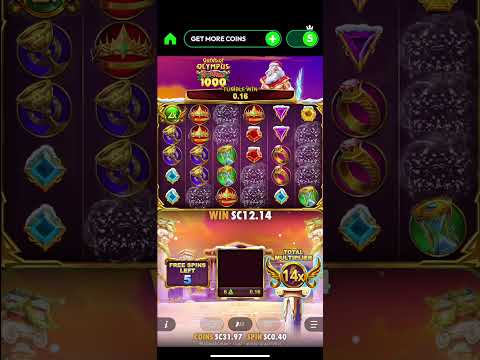
Gates of Olympus 1000, developed by Pragmatic Play, is the powerful sequel to the original Gates of Olympus. Placed against a scene of Mount Olympus with Zeus himself floating beside the reels, the game goes for a 6‑reel, 5‑row grid that uses a scatter pays system rather of traditional paylines. What immediately catches the eye when we load the game is the lack of a gamble button. This is not an error; it is a intentional design philosophy. Pragmatic Play built this slot to deliver its thrills through in‑spin mechanics rather than post‑win side games. Every tumble, every multiplier symbol that lands with a value between 2x and 1,000x, and every free spin that contributes to the global multiplier creates a unbroken stream of anticipation that makes a separate gamble feature superfluous. By taking away the gamble option, the developers maintain the pace unbroken and the focus fixed on the grid, where a single spin can chain multiple tumbles and multiplier combinations.
This design choice also reflects a broader trend in modern high‑volatility slots. When a game already provides the potential for a 15,000x max win and includes multiplier symbols that can emerge at any moment, adding a gamble feature could in fact lessen the core experience. Players might find themselves obliged to gamble every small win, breaking the rhythm of the cascading reels. Instead, Gates of Olympus 1000 encourages us to let wins accumulate naturally through the tumble feature, where winning symbols fade and new symbols drop in, perhaps producing consecutive wins from a single spin. The multiplier symbols, shown as glowing orbs with wings, can land with values of 2x, 3x, 4x, 5x, 6x, 8x, 10x, 15x, 20x, 25x, 50x, 100x, 250x, 500x, or even 1,000x. When multiple multiplier symbols show up in the same tumble sequence, their values are added together before being assigned to the total win. This built‑in amplification eliminates the need for any external gamble mechanic.
How Gamble Options Function: Mechanisms and Alternatives
While the basic premise of increasing a win is simple, the actual application of gamble options varies widely across different slots. The most common format is the card colour gamble. After a win, we are shown a face‑down playing card and must guess whether it is red or black. A correct guess increases our win, while a wrong guess loses it. Some games add a suit gamble, where predicting the exact suit multiplies by four the win, but with a lower probability of success. This classic 50/50 (or 25/75) setup feels fair and intuitive, which is why it remains the industry standard. Another popular variation is the ladder gamble, where we see a prize ladder with increasing values. We hit a button to move up one rung at a time, but a wrong step can drop us down to a lower prize or even zero. The ladder format adds a strategic element, as we must choose when to cash out before pushing our luck too far.
Some developers have introduced more exotic gamble mechanics. For instance, we might see a spinning wheel with coloured segments, a “double or nothing” coin flip, or a multiplier trail where consecutive wins increase the multiplier but one loss resets everything. In all cases, the gamble feature operates outside the main game’s reels and does not affect the slot’s base RTP (return to player) directly. The gamble round itself is usually designed to be statistically fair, meaning the expected value of the gamble is exactly the amount risked, assuming a 50/50 proposition. However, some games subtly weight the odds against us, or limit the number of consecutive gambles we can attempt, or cap the maximum amount that can be gambled. These safeguards protect both the player and the operator from extreme variance. When we play a game like Gates of Olympus 1000, we will notice none of these mechanics, because the developers chose to channel all volatility through the tumble feature and multiplier symbols instead.
Card‑Based Gambles and Their Odds
In a typical card colour wager, the chance of guessing correctly is exactly 50% if the deck is fair and reshuffled after each attempt. This means that over a large number of gambles, we would predict to break even, neither gaining nor losing value from the feature itself. However, the psychological impact is far from neutral. The chance to double a £10 win into £20 feels more real than waiting for a rare bonus round. The suit gamble, where we must pick hearts, diamonds, clubs, or spades, offers a 25% chance of quadrupling the win. While the expected value remains the same, the higher multiplier attracts risk‑tolerant players. It is crucial to understand that these probabilities are independent of the slot’s main RTP. A game with a 96.50% RTP does not suddenly drop to 95% when we use the gamble feature; rather, the gamble adds a separate zero‑expected‑value layer that can increase short‑term variance dramatically.
Staircase Gambles and the Payout Decision
The ladder gamble presents a different mental test. In place of a single binary choice, we face a chain of steps. Each push of the “Gamble” button moves a marker up the ladder to a larger prize, but a unsuccessful press can drop the marker crashing down to a smaller rung or even to zero. The ladder typically shows the current prize, the next higher prize, and the fallback prize. This format compels us to constantly weigh risk versus reward. Should we collect at £25, or take a chance for a chance at £40, realizing we might drop to £10? The ladder gamble mirrors the tension of a game show and can be highly engaging. Yet, it also promotes repeated gambles, which can quickly diminish a win if luck turns sour. The absence of such a feature in Gates of Olympus 1000 implies the game never breaks its flow with these micro‑decisions, maintaining the focus firmly on the cascading grid and the multiplier symbols that can deliver wins up to 15,000x the stake without any side bet.
The Creative Approach Behind Removing the Gamble Feature
When a studio like Pragmatic Play opts to launch a sequel as bold as Gates of Olympus 1000, every design element is purposeful. The move to omit a gamble feature is grounded in a desire to maintain the player immersed into the game’s core loop: spin, tumble, multiply, repeat. Adding a gamble button would create a pause, a moment where the action stops and the player is required to make a distinct decision. For a game that excels on momentum and the visual spectacle of cascading symbols, that pause could disrupt immersion. Additionally, the mathematical model of Gates of Olympus 1000 is already adjusted to offer extreme volatility through its multiplier system. Implementing a gamble feature on top of that would move the variance into territory that might be problematic for many players and could contribute to regulatory scrutiny in certain markets where responsible gaming measures are strengthening.
Another element is the target audience. Gates of Olympus 1000 is built to attract to players who prefer the “one big hit” potential. These players are often less keen in churning out small doubled wins and more centered on the chance of reaching a 15,000x max win during free spins. The game’s free spins round, with its persistent multiplier, fundamentally offers a long‑form gamble that creates anticipation over multiple spins. Each new multiplier symbol that lands brings to the pot, and the tension escalates with every tumble. This gradual progression is far more captivating than a simple card guess, and it matches with the epic, mythological theme of Zeus and Mount Olympus. By omitting the gamble feature, the developers compel us to engage with the game’s unique selling points rather than leaning on a generic mechanic that can be found in hundreds of other slots.
How to Play Gates of Olympus 1000: A Detailed Walkthrough
Starting with Gates of Olympus 1000 is straightforward, including for players who are new to scatter‑pays slots. The layout is clear and user-friendly, with all main controls positioned below the 6×5 grid. We begin by adjusting our bet level with the plus and minus buttons. The total bet per spin is clearly displayed, and we may also access the bet settings menu to pick from a variety of predefined values. Once our stake is set, we hit the big spin button in the centre to set the reels in motion. There is additionally an autoplay function that allows us to select a number of automatic spins, often with optional loss and single‑win limits, though availability depends on the jurisdiction. We advise familiarising ourselves with the paytable first by tapping the “i” or menu icon, where all symbol values, multiplier rules, and free spins conditions are described thoroughly.
During gameplay, the tumble feature triggers by itself after any win. We simply observe as winning symbols disappear and new ones fall down. Multiplier symbols that appear will show their value and then be collected at the end of the tumble sequence. If four or more Zeus scatters land, the free spins round begins immediately after the tumble sequence concludes. During free spins, the total multiplier is shown in a prominent meter above the reels. We do not need to press any additional buttons; the game handles all multiplier accumulation and application by itself. When the free spins end, a summary screen presents our total win from the feature, and we head back to the base game. At no point are we given a gamble option, so every win is credited directly to our balance. This seamless flow renders the game easy to follow, yet the underlying depth of the multiplier mechanics makes sure that no two sessions feel alike. For the best experience, we suggest starting with smaller bets to watch how the tumbles and multipliers interact before increasing the stake.
Understanding the Paytable and Symbol Values
Before you start, we always check the paytable to grasp the winning criteria. Gates of Olympus 1000 awards for clusters of 8 or more matching symbols on the reels, with higher payouts for 10 or 11, and the highest for 12 or more. The low‑paying symbols are five coloured gemstones, while the high‑paying symbols are a ring, a goblet, an hourglass, and a crown. The crown is the most rewarding, awarding 50x the bet for 12+ symbols. The scatter symbol triggers independently of clusters: 3x for four scatters, 5x for five, and 100x for six. There is no wild symbol in this game, which means every win is based solely on matching symbols and the multiplier orbs. This information is essential for managing expectations, as the absence of wilds makes the tumble feature and multiplier symbols more important for achieving substantial payouts.
Utilizing Autoplay and Responsible Gaming Tools
Most platforms offering Gates of Olympus 1000 provide autoplay functionality alongside responsible gaming tools. We may set the autoplay to function for a set number of spins and, where permitted, set up stop conditions such as a loss limit or a single‑win threshold. Because the game is missing a gamble feature, autoplay sessions proceed uninterrupted, which can be both a convenience and a risk if we are not tracking our balance. We always recommend setting a session budget and a time limit before using autoplay. The high volatility means that long losing streaks can occur, and without a gamble button to make quick recoveries, the only way to manage risk is through disciplined stake selection and voluntary limits. The game’s design, while thrilling, demands respect for its variance, and responsible play makes sure that the experience remains entertaining rather than stressful.
Stake Options and Maximum Payout in Gates of Olympus 1000
Gates of Olympus 1000 supports a wide spectrum of playing styles with a flexible betting range. We can choose our stake from a minimum of £0.20 per spin up to a maximum of £100 per spin, though some operators may offer an even higher upper limit of £125. This range makes the game accessible to casual players who opt for low‑risk spins while still catering to high rollers chasing the game’s massive payout ceiling. The max win is capped at 15,000 times our total bet, which means a single spin at the minimum stake could theoretically return £3,000, while a maximum stake spin could yield an eye‑watering £1,500,000. It is important to remember that such outcomes are extremely rare and are the result of a perfect storm of multiplier symbols during free spins, combined with multiple high‑value symbol clusters. The high volatility rating means that dry spells are common, and the game can consume a bankroll quickly if we are not prepared for long stretches without a significant win.
When we examine the betting strategy for a game without a gamble feature, the decision becomes purely about stake size and session length. Because we cannot artificially inflate wins through a double‑or‑nothing mechanic, we must rely entirely on the game’s internal volatility to deliver. This promotes a more disciplined approach: setting a loss limit, choosing a bet level that allows for at least 150 to 200 spins, and resisting the urge to chase losses. The absence of a gamble button removes the temptation to risk a £50 win for a shot at £100, which can actually help preserve our bankroll over a longer session. Instead, every win is final and can be immediately withdrawn or reinvested into the next spin. For players who appreciate the clarity of knowing exactly where they stand after each tumble sequence, this design is a significant advantage. The max win potential remains the star attraction, and the game’s structure ensures that the path to that 15,000x prize is paved entirely by the reels themselves.
The mathematics behind Gamble Options: RTP and Volatility
From a mathematical standpoint, a equitable gamble feature does not change the theoretical return to player of the slot. If a game has a base RTP of 96.50%, introducing a 50/50 double‑or‑nothing gamble does not alter that long‑term percentage, because the expected value of the gamble is neutral. However, the feature significantly increases the volatility of our session. Volatility, or variance, measures how much and how often a slot pays out. A high‑volatility game already produces fewer but larger wins. Adding a gamble option amplifies this effect, because we are concentrating our wins into fewer, higher‑value outcomes interspersed with more frequent total losses of those gambled amounts. This can make our balance swing wildly, which is exactly what some players seek, but it can also drain a bankroll faster if we hit a losing streak in the gamble rounds.
It is also important to note that not all gamble features are perfectly fair. Some games may have a slight house edge built into the gamble mechanic, or they may cap the number of consecutive gambles to limit exposure. As responsible players, we should always check the game rules or the paytable information to see if the gamble round is described as a 50/50 chance or if any restrictions apply. In the case of Gates of Olympus 1000, the mathematics are handled differently. This slot offers a default RTP of 96.50% and is classified as highly volatile. The volatility is driven not by a gamble button but by the scatter‑pays engine, the tumble feature, and the random multiplier symbols that can land on any spin. During the free spins round, a progressive multiplier builds up every time a multiplier symbol hits, and this total multiplier applies to all subsequent wins. The result is a game that can deliver enormous payouts without ever asking us to risk a win we have already secured. The max win is capped at 15,000x our bet, a figure that places it firmly in the high‑potential category.
The Allure of Risk and Reward: Why Players Utilize Gamble Features
We are inherently drawn to the gamble feature because it taps into a fundamental human desire for agency and instant gratification. After landing a modest win of £2, the prospect of turning it into £4 with a single click feels like a minor victory we can control, unlike the random spin that produced the win. This illusion of control is powerful, even though the outcome is entirely chance‑based. The gamble feature also decreases the feedback loop. Instead of waiting for the next spin, we get instant resolution. For players who relish the thrill of risk, this rapid‑fire decision‑making can make a session much more exciting than the base game alone. It is not unusual to see players repeatedly gamble small wins, building them up through a streak of correct guesses, only to lose everything on one wrong call. This rollercoaster of emotions is specifically what the feature is designed to deliver.
Another reason players welcome gamble options is the ability to fast‑track towards a bonus buy threshold or a personal cashout goal. If a slot requires a specific balance to purchase free spins, doubling a few medium wins can accelerate that process. However, this strategy is a double‑edged sword. While it can work in the short term, the zero‑expected‑value nature of the gamble means that, over time, we are just as likely to lose those wins and delay our goal. Curiously, the design of Gates of Olympus 1000 removes this temptation entirely. There is no gamble button to press, so we are never faced with the dilemma of risking a win. Instead, the game channels all its excitement through the tumble mechanic and the Zeus multiplier symbols, which can appear with values of up to 1,000x and combine during free spins for colossal payouts. The absence of a gamble feature actually eases the decision‑making process, allowing us to focus on the core gameplay loop without distraction.
Exploring the Action of Gates of Olympus 1000: Falls, Boosters, and Free Spins
The heart of Gates of Olympus 1000 beats through its tumble system. After every winning sequence, the winning symbols are eliminated from the grid, and new symbols drop from above to fill the gaps. This sequence repeats as long as new victorious sequences form, enabling a single paid spin to produce multiple consecutive wins. During any tumble, multiplier symbols can show up. These special symbols do not need to be part of a successful sequence; they simply arrive and display a random multiplier value. At the end of a tumble sequence, all multiplier values on the screen are added together, and the total win of that series is multiplied by that sum. In the base game, this can result to substantial payouts, notably if several valuable multipliers arrive together. The symbols themselves are a blend of colourful gemstones and Greek relics, with the highest‑paying symbol being a crown, which gives 50x the bet for 12 or more corresponding symbols anywhere on the grid.
The free spins feature is where Gates of Olympus 1000 truly unleashes its potential. To activate it, we need to get four or more scatter symbols, which are represented by Zeus himself, across the reels. This gives 15 free spins. During the free spins round, a special total multiplier meter becomes active. Every time a multiplier symbol appears during a free spin, its value is accumulated into this total multiplier, which does not reset between spins. When a winning tumble sequence occurs, the total multiplier accumulated so far is multiplied by the win. This means that as the free spins advance, the multiplier can reach enormous values, effortlessly attaining hundreds or even thousands of times. If we hit three additional scatters during the feature, we are awarded five extra free spins, lengthening the game and allowing the total multiplier even more time to grow. The lack of a gamble feature here is a benefit; we never have to decide whether to risk a free spins win, because the game automatically channels all momentum into the escalating multiplier.
The Role of Multiplier Symbols in Base Game and Free Spins
Multiplier icons in Gates of Olympus 1000 operate identically in the base game as well as free spins, but their effect is amplified during the bonus round due to the ongoing cumulative multiplier. In the base game, a multiplier symbol’s value applies only to the current tumble sequence and then disappears. During free spins, that same value is applied not just to the current win but is also continually added to the running total, boosting every subsequent win. This twofold purpose makes every multiplier symbol in free spins immensely beneficial. The potential multiplier figures range from 2x up to 1,000x, and spotting a 500x or 1,000x orb land during free spins can rapidly convert the round into a massive reward. Because the game uses a scatter pays mechanic, wins are awarded for eight or more matching symbols anywhere on the grid, which means multiple winning clusters can form simultaneously, all gaining from the accumulated multiplier.
Scatter Signs and the Free Spins Trigger
The scatter symbol is the main component to triggering the game’s most profitable phase. We need at least four Zeus scatter symbols to show up on the same spin to trigger 15 free spins. The scatters can show up on any reel and do not need to be on adjacent positions. When the feature is activated, we are first awarded a payout of 3x, 5x, or 100x our total bet for four, five, or six scatters respectively, before the free spins start. During the free spins, the background changes to a more powerful, stormy sky, and Zeus becomes more animated, enhancing the sense of increasing power. The feature can be reactivated by hitting three or more scatters, awarding five extra spins each time. There is no upper limit to how many times we can retrigger, and the total multiplier never resets, which is why this slot can achieve its 15,000x max win cap during an extremely lucky free spins session.
Comparing Slots Offering and Excluding Gamble Options: Which One Suits You?
Deciding between a slot that includes a gamble feature and one that does not in the end comes down to personal preference and playing style. Slots with gamble options, such as many classic fruit machines and older video slots, give us an active role in shaping our session outcome. We can decide to play it safe and collect every win, or we can accept the risk and seek to multiply our payouts. This interactivity can make a session feel more engaging, especially during periods when the base game is not delivering frequent wins. However, the gamble feature can also lead to impulsive decisions and faster bankroll depletion if we chase losses through repeated gambles. The psychological pressure of the “double or nothing” moment is not for everyone, and some players find it detracts from the relaxing, escapist quality they seek in slot play.
Slots without gamble options, like Gates of Olympus 1000, provide a distinct kind of appeal. They are total, unadulterated reel action. Every win is conclusive, and the excitement is embedded in the game’s mechanics rather than a side bet. This structure tends to fit players who enjoy a faster pace and a more straightforward experience. The omission of a gamble button also removes a potential source of second-guessing; we never have to wonder if we should have gambled that £20 win because the option simply does not occur. Instead, the game compensates with high‑powered features like the progressive multiplier in free spins, which can deliver wins far larger than any gamble sequence could realistically yield. For those of us who appreciate clarity, speed, and the potential for enormous single‑spin payouts, a no‑gamble slot like Gates of Olympus 1000 is an excellent choice. The following list outlines the key differences to help you determine which style aligns with your preferences.
- With Gamble Option: Presents decisions after winning; may double or quadruple winnings; raises session volatility; offers a feeling of control; can promote impulsive play; often found in classic and medium‑volatility slots.
- Without Gamble Feature (e.g., Gates of Olympus 1000): Wins are collected automatically; volatility comes entirely from in‑game features; no post‑win decision fatigue; promotes a smoother, faster gameplay flow; is ideal for players who prefer high‑potential base features such as progressive multipliers and tumbles.
Analyzing Gates of Olympus 1000 in particular, we observe a game that has been meticulously crafted to provide maximum excitement without ever requiring a gamble button. The combination of scatter pays, tumble sequences, and multiplier symbols that can reach 1,000x creates a self‑contained ecosystem of risk and reward. The free spins round, with its accumulating total multiplier, works almost like a integrated gamble that plays out over multiple spins, but without the binary win‑or‑lose moment. This design philosophy is becoming progressively popular among top providers, as it fits with the modern player’s desire for engaging, feature‑rich experiences that do not rely on external mini‑games. Whether you miss the gamble button or are glad by its absence, understanding its role helps you grasp the careful balance that developers maintain between player agency and mathematical integrity.
In what manner the Removal of a Gamble Feature Affects Session Management
Handling a session on a slot lacking a gamble option demands a somewhat different mindset. Because we cannot artificially prolong our playtime by doubling small wins, we have to be more aware of our starting bankroll and bet size. A typical strategy on gamble‑heavy slots involves setting a low base bet and then utilizing the gamble feature to boost wins up to a desired level. On Gates of Olympus 1000, that tactic lies off the table. Alternatively, we have to recognize that the game features periods of dead spins and small tumble wins, broken up by occasional larger hits when multiplier symbols align favourably. This pattern might appear punishing if we are not prepared for it, but it also signifies that when a big win arrives, it is often considerable enough to recoup previous losses and then some. The key lies in to establish a loss limit and stick to it, resisting the urge to raise the bet after a dry spell.
We discovered that the most satisfying way to tackle Gates of Olympus 1000 is to treat it as an entertainment experience with a fixed budget. Determine on a total amount you are comfortable losing, break it into 150 to 200 spins, and adjust your bet accordingly. For example, with a £50 budget, a bet of £0.25 provides you 200 spins, which is usually enough to activate the free spins feature at least once, though there are no guarantees. During the session, celebrate the multiplier sequences and the free spins when they appear, but do not anticipate the game to produce consistent small wins. The absence of a gamble button implies you will never confront the temptation to jeopardize a free spins payout, which is a hidden blessing. Many players experienced the sting of gambling a bonus round win only to give up it all. Here, that scenario simply is unable to happen, permitting you to walk away with whatever the reels provided you, no second‑guessing required.
The outlook of gambling features in high-risk slots
As the video slot sector develops, we are witnessing a distinct split in how gamble features are used. In low- and medium-variance games, the gamble option continues to be a popular tool to inject excitement and provide players a feeling of control. In high-variance, feature‑dense slots like Gates of Olympus 1000, the direction is departing from conventional gamble features. Software providers are instead building the betting mechanic straight into the gameplay through systems such as growing multipliers, progressive jackpots, and buy-in bonuses. These embedded risk features appear more organic and not resembling a separate mini‑game, which resonates with a segment of users who prioritize seamless, quick action. The success of the Gates of Olympus franchise, along with other scatter-pay games, suggests that the industry is open to this strategy.
Policy updates are also affecting this transformation. In markets like the UK, where responsible gambling measures are more rigorous, elements that encourage repeated risk‑taking in fast order are under scrutiny. A gamble button that lets users to increase a prize ten times in a row can be viewed as fostering dangerous conduct. By removing the gamble feature entirely, companies like Pragmatic Play sidestep these worries while still providing a thrilling experience. We expect to see more slots emulate this template, providing huge payout possibilities through embedded multipliers and bonus games rather than after-win bets. Gates of Olympus 1000 stands as a key instance of how a slot can be extremely high-variance and ethically crafted, showing that the risk mechanic is not a must-have for excitement but rather just one element in a developer’s kit.